


Find Out Which are the Top Ranked Private Universities in Malaysia Offering Food Science & Nutrition Degree Course
Food Science is a challenging degree programme, where the study begins with an understanding of the biological and physical sciences as a basis for understanding the science of food and nutrition, as well as the relationship between nutrition and health. Students possessing an analytical, inquisitive mind who are interested in applying food science principles to further enhance the health and welfare of mankind, will benefit greatly from this programme. Students who are good in Chemistry and Maths with a strong interest in sciences, can consider taking this course
Food Scientists apply their knowledge in biology, chemistry, physical sciences, and engineering to study the nature of foods, the causes of their deterioration, and the principles underlying food processing. They will also study all the technical aspects of food from harvesting or slaughtering to cooking and finally being consumed safely. Food Science is different from the field of nutrition.
Studying Food Science and Nutrition involves various science disciplines such as chemistry, biochemistry, nutrition and engineering to teach students how diet and nutrition affects the health of individuals, and also the technologies for creating new food products, and designing new processes to improve the safety and quality of foods
You might also be interested in:
- Malaysia’s Top 5 Private Universities to Study Food Science
- How to Become a Food Scientist or Food Technologist in Malaysia
- Best Food Science Degree Programmes in Malaysia
- Best Food Science & Nutrition Degree Course at Top Private Universities in Malaysia
Best Food Science & Nutrition at Top Private Universities in Malaysia

Food Scientists apply their knowledge in biology, chemistry, physical sciences, and engineering to study the nature of foods, the causes of their deterioration, and the principles underlying food processing.
Subjects you may encounter at Malaysia’s top private universities include cell and molecular biology, human physiology and nutrition, food safety, food processing, and food quality assurance. The degree programme will be delivered in a mixture of modes including lectures and seminars, as well as practical and laboratory based projects. At the final year of your course, you may also be able to take part in a work placement or internship.
They will also study all the technical aspects of food from harvesting or slaughtering to cooking and finally being consumed safely. Food Science is different from the field of nutrition.
Education Pathway
Students after SPM or IGCSE/O-Levels will join the Foundation in Science for 1 year before continuing on to the 3-year Food Science programme at a top private university in Malaysia.
Other than the Foundation in Science, students may go for a Pre-University programme such as the A-Levels, SACEi, STPM, etc before continuing on to the course.
Students interested to know which are the best universities in Malaysia for Food Science may contact us for more information.
Which are the Top Private Universities for Food Science in Malaysia?

Hui Teng, Food Science with Nutrition at UCSI University
There are many advantages for studying at a top private university in Malaysia, starting from getting a good and stable career to working in the best of the environments. Students will also get to learn from the best lecturers.Because of the higher education standards at top private universities, your course mates will be just as brilliant as you are having the same like mindedness to achieve success in your academics as well as future career. Group work will be easier as they will all be working hard to achieve the same goals.
The top notch education that you receive will ensure you have the knowledge and skills to obtain a high paying job and achieve financial stability quickly.
Choosing the right university for your Biotechnology undergraduate studies is important as it will help to shape your mind, character and help you to develop the necessary skills for a successful career. In addition, not all private universities are the same.
Therefore, you should research carefully and look at the subjects offered, facilities, lecturers’ experience, student environment, awards won and ranking to guide you in your decision making. You should not choose a university because it is the cheapest, easiest and nearest. It should be based on which university that best fits your needs.
Starting your university search with the basics will help you identify the universities that will best suit you academically and personally. Each of us has unique needs and values, and what is important to you may not matter to someone else.
Below are 5 top private universities for you to consider your Biotechnology studies:
No. 1 Monash University Malaysia

As a Monash Malaysia student, you will be inspired by great teachers, researchers and fellow students, who are shaping the future of scientific knowledge and practices. Upon graduation, you will be able to lead in a career where scientific knowledge and thinking is important.
The Bachelor of Science at Monash offers you choice. Depending on your background, you can complete a generic science degree, where you tailor your own course of study by selecting the units that suit your interest. Students also have the option of pursuing our prestigious honours program and undertaking independent research under the guidance of a world expert in their area of expertise.
Food science and technology involves the understanding of the science of food, its importance to human nutrition and wellbeing, and the way raw materials are processed into food. It also focuses on aspects of food technology such as preservation, processing, packaging and distribution, which ensure that food is safe, nutritious and wholesome.
The Bachelor of Food Science and Technology will help you to develop a greater understanding of how agricultural raw materials are processed and formulated before it’s presented to the consumer.
| Programme Offered | Bachelor of Food Science and Technology |
| Duration | 3 Years |
| Intake | February, July and October |
| Approximate Total Fees (2024) | RM 146,880 |
No. 2 Taylor’s University Lakeside Campus in Malaysia
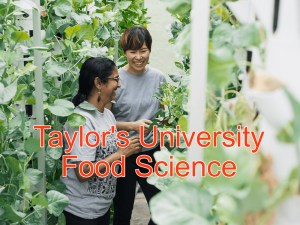
In Taylor’s Bachelor of Food Science (Honours) programme, they aim to provide students with an in-depth understanding of various aspects related to food science. Throughout the programme, you will gain valuable knowledge and skills in areas such as food processing, food texture, flavour, nutritional composition, sensory evaluation, and food safety.
The top rated 3-year Bachelor of Food Science (Honours) programme at Taylor’s University offers students the opportunity to learn the science and technology of involved in food creation, processing and preservation, as well as the use of nutrition to improve human health.
Through this Bachelor of Food Science (Honours) programme, Taylor’s University is able to produce graduates who can contribute to the research and development of new food products or add value to current food products and graduates can pursue careers as Dietitians, Food Technologists, Toxicologists, Nutritional therapists and more in the field of food sciences.
Students in Taylor’s Food Science degree programme will be equipped with scientific knowledge to develop innovative, safe and healthy food products; the ability to advice and provide nutritional information for individuals; and entrepreneurial skills to set up food related business ventures in Malaysia and globally.
| Programme Offered | Bachelor of Food Science (Honours) |
| Duration | 3 Years |
| Intake | February, April and September |
| Approximate Total Fees (2024) | RM 112,694 |
No. 3 UCSI University
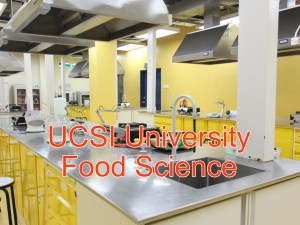
The BSc (Hons) Food Science with Nutrition degree at UCSI University is designed to provide students with practical “hands-on” experience through a comprehensive and practical curriculum of cutting edge research and studies in food science and nutrition, the curriculum will not only enable students to gain pertinent knowledge and skills to work in the food manufacturing industry, government agencies, colleges and universities, as well as research laboratories, but will also equip them with good interpersonal communication skills and the ability to work in teams to solve multi-disciplinary problems.
Under the direction and guidance of qualified professors and academicians, as well as experienced laboratory technologists, students are exposed to a variety of laboratory equipment and skills at UCSI University.
UCSI University is the first private university to offer the degree in Food Science & Nutrition. Through UCSI’s dynamic Food Science with Nutrition degree programme, you will explore the secret science behind food production, development and safety while you develop the research skills to enable you to pursue an exciting career within the food manufacturing industry, research institutes, government, and consumer organisations.
As the market leader of Food Science studies in Malaysia, you will be able to utilise the latest practices in the industry and experience first-hand how technology affects food production and flavour delivery. You will enjoy avenues to create new food products and market them.
And with a sound understanding of food safety, nutrition and legislation, you can rest assured that your future endeavours will change lives. This programme received a 100% graduate employability score in the Ministry of Higher Education’s Graduate Employability 2022.
| Programme Offered | BSc (Hons) Food Science with Nutrition |
| Duration | 3 Years |
| Intake | January, May and September |
| Approximate Total Fees (2024) | RM 98,560 |
No. 4 University of Nottingham Malaysia

The University of Nottingham Malaysia Campus offers a world and UK top ranked degree in Biotechnology at their state-of-the-art research campus. A member of the Russell Group, the University of Nottingham has award-winning campuses in China and Malaysia.
The School of Biosciences at The University of Nottingham Malaysia Campus enjoys close teaching and research links with the department in the UK. Alongside a commitment to innovative teaching, the School of Biosciences is an internationally-recognised leader in several fields, including plant and food production, food quality and safety, nutrition, and environmental protection. The latest UK Research Assessment Exercise (RAE) confirmed the School’s top position in our research areas.
At the Malaysia Campus our portfolio is rapidly expanding with new environmental science programmes and research exploring the use of underutilised plants. Our presence in Malaysia is enabling us to conduct major research projects into the uses of tropical plants, and we currently have an industrial partnership with Applied Agricultural Resources in which we are researching oil palm.
The School of Biosciences offers a 3-year BSc (Hons) in Nutrition with a professional training placement during the Year-3 Summer Semester. This undergraduate degree programme intends to equip students with all the necessary skills needed to kick-start a career in their respective field of study. Nutrition is the study of nutrients in food coupled with how the body uses them and their relationship between diet, health and disease. Through evidence-based research students will learn to identify fact from fiction with regards to dietary recommendations and healthy eating. They will learn how to handle and prepare food, where to identify key nutrients and the impact of processing on the nutritional quality of foods.
Through a combination of theoretical learning and practical experiences, students learn about various aspects of nutrition, including macronutrients, micronutrients, dietary requirements, metabolism, and the impact of nutrition on human health.
| Programme Offered | BSc (Hons) Nutrition |
| Duration | 3 Years |
| Intake | September |
| Approximate Total Fees (2024) | RM 137,700 |
No. 5 UTAR
Food Science is a multidisciplinary science that integrates various fundamentals and potential aspects of food molecules, food chemistry, food microbiology, food safety, post-harvest processing, nutrition, food quality assessment, functional food and nutraceuticals. Students pursuing the Bachelor of Science (Honours) Food Science programme in UTAR would be equipped with an in-depth understanding of science as it applies to foods and involves hands-on laboratory activities.
The students are guided and trained to understand the nature of raw food materials and their transformation into final consumable products with the concept of “From farm to fork”. In fact, by understanding and mastering the knowledge of food science, knowing how the food ingredient change or interact when being stored or processed, capable of doing food risk assessment, able to apply proper techniques of operating food processing instrument and conducting food analysis can play an important role in producing safe, nutritious and wholesome food to meet the high demand of the increasing global population.
In this programme, students are also guided and have the opportunity to formulate their own creative new product development, optimising food production yield, quality and shelf life, gauging consumer demand and preference by conducting proper sensory tests in the equipped food processing lab and sensory lab in UTAR. Moreover, industry visit are organised for the students to provide them with real industrial practices and exposure to enhance their learning in those particular courses and bring more impactful fun learning experiences.
| Programme Offered | Bachelor of Science (Honours) Food Science |
| Duration | 3 Years |
| Intake | January, June, October |
| Approximate Total Fees (2024) | RM 53,000 |
What will you Study in a Food Science Degree?

Kah Wai, now graduated with Food Science & Nutrition
Students will apply their knowledge of microbiology and biochemistry to find ways to improve the taste and nutritional value of our food supply. They will study the physical, microbiological, and chemical makeup of food. In addition to studying Chemistry, Biochemistry and Microbiology, students will explore subjects like nutrition, food biotechnology, quality assurance, waste management and even food and beverage engineering.
In the Food Science degree programme students will be equipped with scientific knowledge to develop innovative, safe and healthy food products; the ability to advice and provide nutritional information for individuals; and entrepreneurial skills to set up food related business ventures in Malaysia and globally.
Furthermore, Food Science degree is designed to provide students with practical “hands-on” experience through a comprehensive and practical curriculum of cutting edge research and studies in food science and nutrition, the curriculum will not only enable students to gain pertinent knowledge and skills to work in the food manufacturing industry, government agencies, colleges and universities, as well as research laboratories, but will also equip them with good interpersonal communication skills and the ability to work in teams to solve multi-disciplinary problems.
Moreover, studying Food Science and Nutrition involves various science disciplines such as chemistry, biochemistry, nutrition and engineering to teach students how diet and nutrition affects the health of individuals, and also the technologies for creating new food products, and designing new processes to improve the safety and quality of foods
What Type of Students Should Study Food Science?
A challenging programme, the study begins with an understanding of the biological and physical sciences as a basis for understanding the science of food and nutrition, as well as the relationship between nutrition and health.
Students possessing an analytical, inquisitive mind who are interested in applying food science principles to further enhance the health and welfare of mankind, will benefit greatly from this programme.
Students who are good in Chemistry and Maths with a strong interest in sciences, can consider taking this course.
What do Food Science Graduates in Malaysia work in?

The food industry is one of the largest manufacturing industries in the world and it provides great employment opportunities for food scientists and nutritionists to meet the ever increase consumer demand for food products that are both nutritious and convenient.
Additionally, Food scientists are generally involved in the area of research and development of products and processes, supervision of food manufacturing processes, which include production, quality control, quality assurance and food safety, as well as in food engineering support, marketing and sales, product support and promotion.
They may also work within consulting laboratories, government organisations and regulatory bodies as food scientists, food microbiologists, flavour chemists and food safety inspector.
Food Science graduates are fully prepared for positions in quality assurance, product development, research, and technical services in a variety of industries and companies.
Food Science graduates are employed in management, process engineering, marketing, quality assurance and product development in a variety of food sectors which include the fish, meat and dairy industries, the brewing, baking and confectionery industries and service industries such as packaging, ingredient and equipment supplies.
Job demand for Food Science professionals in Malaysia is high with so many Food manufacturing companies such as Kraft, Kawan Foods, Nestle, Lee Kum Kee, Maggie, F&N, Guiness Anchor, M&M, Gardenia, Carlsberg Brewery, Old Town White Coffee, Unilever Food Solutions, and more.